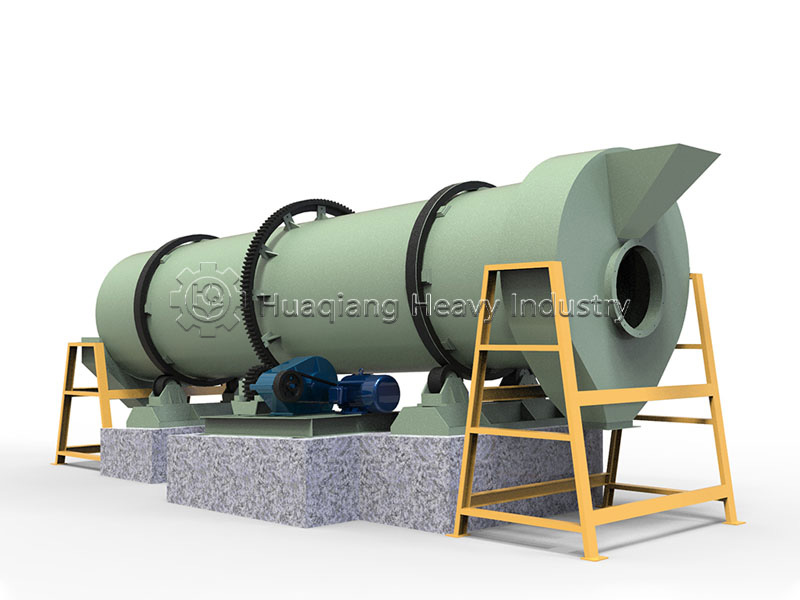
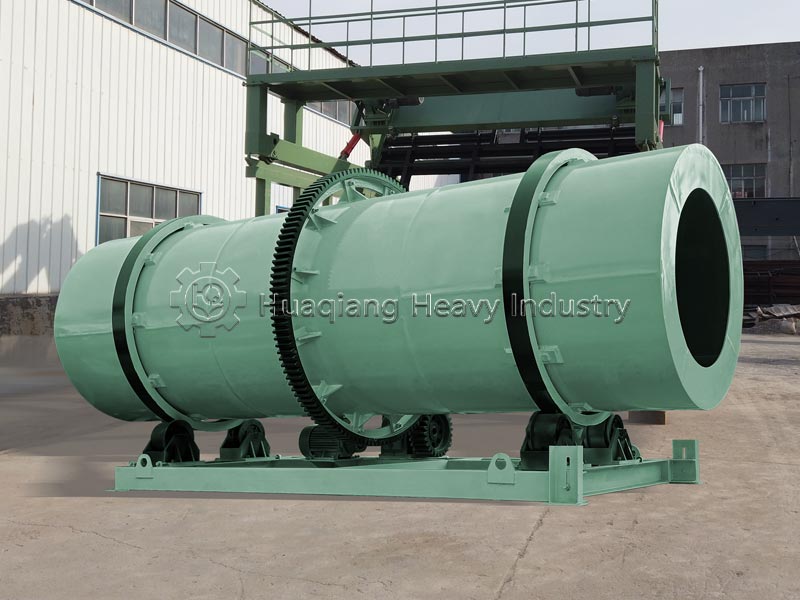
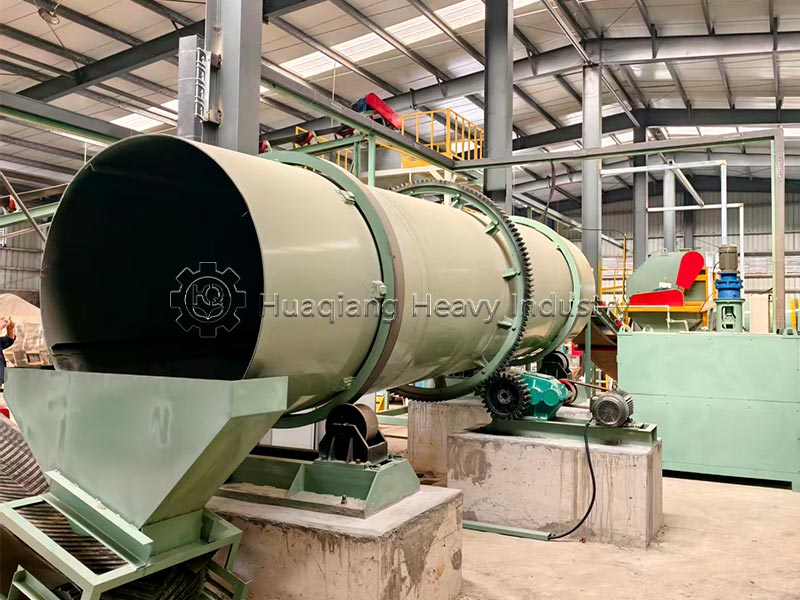
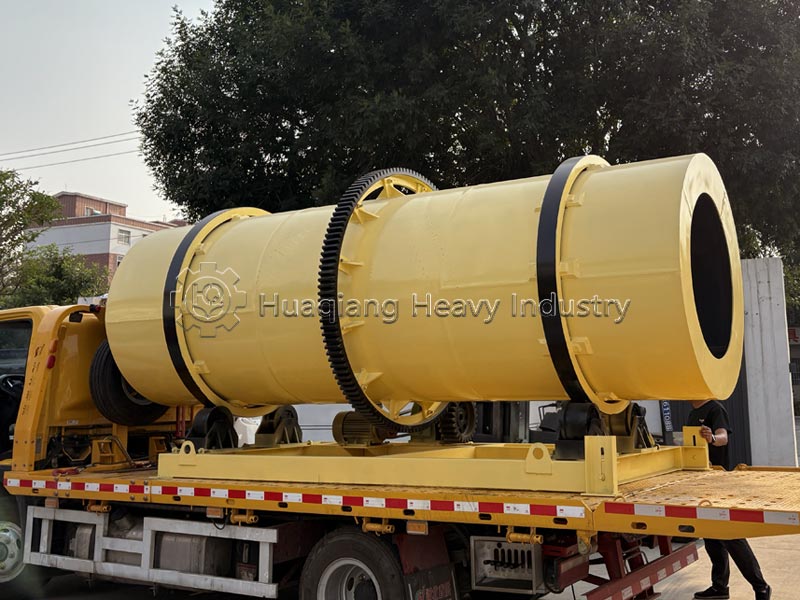
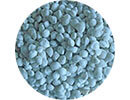
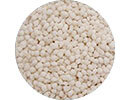
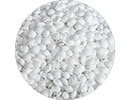
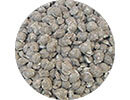
A fertilizer coating machine is specialized equipment designed to coat the surface of fertilizer granules. Utilizing physical rotation and spraying technologies, it evenly applies powdered or liquid coating materials onto the granules to form a protective film. This film prevents caking and enhances granule strength; more importantly, it enables the slow or controlled release of nutrients, thereby significantly improving fertilizer utilization efficiency.
The working principle of the fertilizer coating machine is straightforward, though it relies on the coordinated operation of multiple systems.
The main motor drives a speed reducer via a belt and pulley system, and the reducer transmits power to the drive shaft. A split gear mounted on the drive shaft meshes with a large ring gear fixed to the drum, thereby rotating the drum.
After entering the drum, the material is continuously lifted and tumbled by internal lifting flights as the drum rotates, creating a uniform curtain of material. Simultaneously, the coating agent is applied to the surface of the tumbling granules via a spray system (for liquid coating) or a powder applicator (for powder coating). Through repeated tumbling, the granules come into full contact with the coating agent, gradually acquiring a uniform coating film. The finished product is continuously discharged from the outlet, enabling a streamlined production process.
Fertilizer coating machines are used for the vast majority of granular fertilizer products:
Compound/mixed fertilizers: Coating prevents moisture absorption and caking, thereby enhancing storage stability.
Slow-release/controlled-release fertilizers: Coating materials such as resin or sulfur are used to achieve the gradual release of nutrients.
Organic/bio-organic fertilizers: Coating prevents organic matter from absorbing moisture and caking, while also serving as a carrier for functional microbial agents.
When choosing a coating machine, it is recommended to focus on the following dimensions:
Coating uniformity is the most direct criterion. A high-quality coating machine can control the coefficient of variation of coating uniformity within 5%. Through actual operation testing, focus on observing three key indicators: coating uniformity, adhesion, and production efficiency.
Components that directly contact fertilizer and coating agents should have good corrosion resistance. A cylinder lined with polypropylene or acid-resistant stainless steel is more durable. Load-bearing components such as the support rollers are welded from medium carbon steel plates and channel steel, while the support rollers are made of high-quality corrosion-resistant and wear-resistant materials.
The uniformity and adjustability of the nozzles directly determine the coating quality. Dual-fluid nozzles can achieve atomization of 50-80μm, increasing material utilization to 92%, but require a stable air source of 0.6MPa or higher.
Some coating processes require curing at specific temperatures, making the availability of a hot air system or temperature control device crucial.
Don't overemphasize high speeds—high-speed models are 30% more sensitive to raw material moisture content. When the moisture content exceeds 15%, the coating peeling rate doubles, requiring a high-efficiency drying system. Simultaneously, the material moisture content should be controlled below 2%; otherwise, the coating layer is prone to peeling or clumping.
Purchase Tip: It is recommended to conduct a trial run with the material before signing the contract, observe the coating effect on-site, and verify the equipment materials and specifications.
| Model | Barrel | Capacity | Power | |||
| Internal Diameter | Length | Inclination | Rotation speed | |||
| mm | mm | mm | ° | r/min | t/h | kW |
| BM1200×4000 | 1200 | 4000 | 3 | 14 | 1-5 | 5.5 |
| BM1400×4000 | 1400 | 4000 | 3 | 13 | 5~7 | 7.5 |
| BM1600×6000 | 1600 | 6000 | 3 | 12 | 7~15 | 11 |
| BM1800×8000 | 1800 | 8000 | 3 | 12 | 15~30 | 15 |
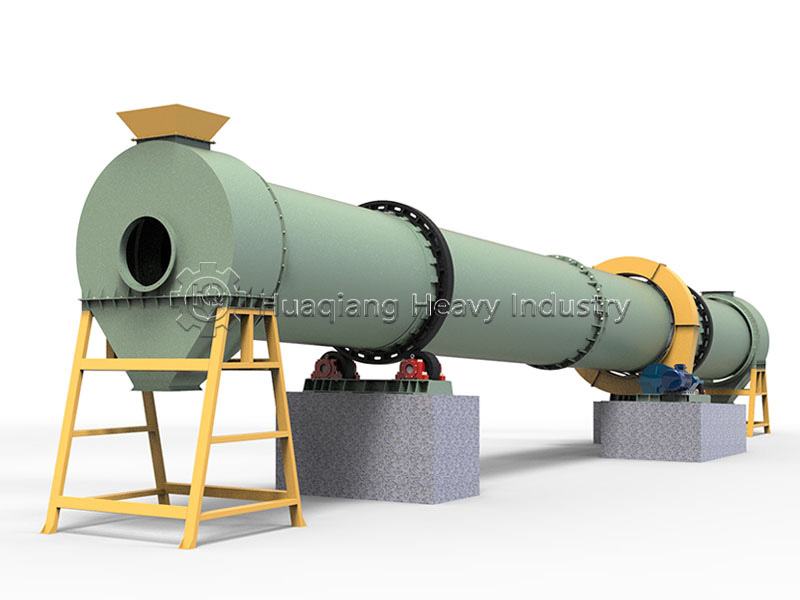
The drum fertilizer dryer utilizes the rotation of the drum to convey material and employs hot air for heat exchange to dry the fertilizer; it offers uniform drying and high production capacity, making it suitable for various types of organic fertilizer processing.
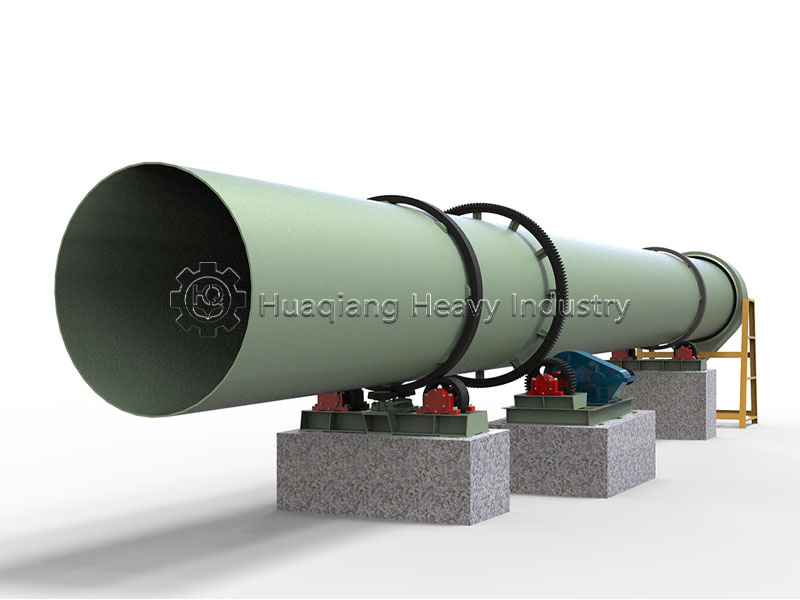
Drum cooler is a new generation of high efficiency cooling machine developed by our staff for many years of compound fertilizer production experience. It is paired with the rotary drum dryer for cooling the fertilizer particles in a certain temperature