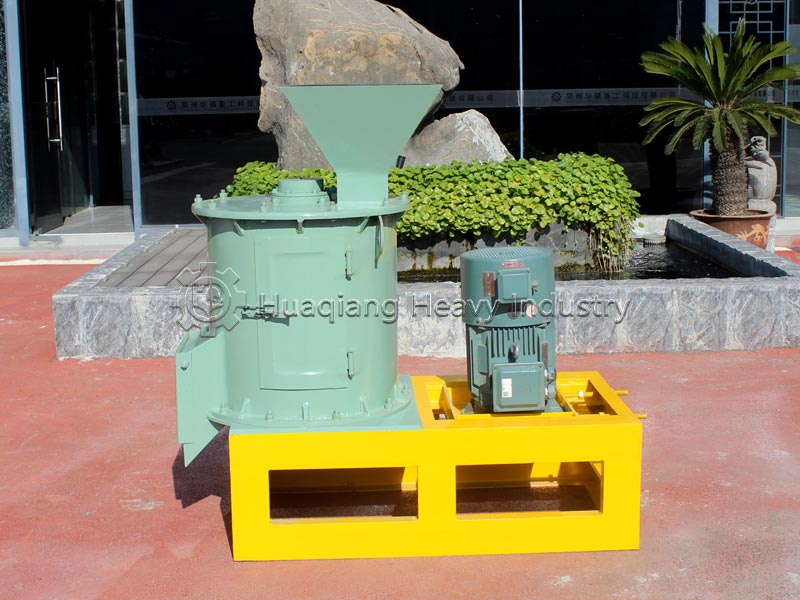
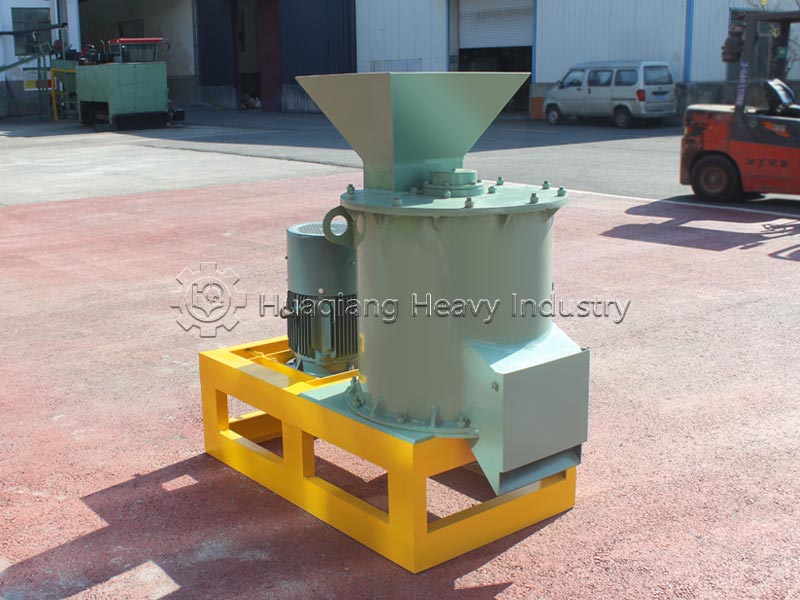
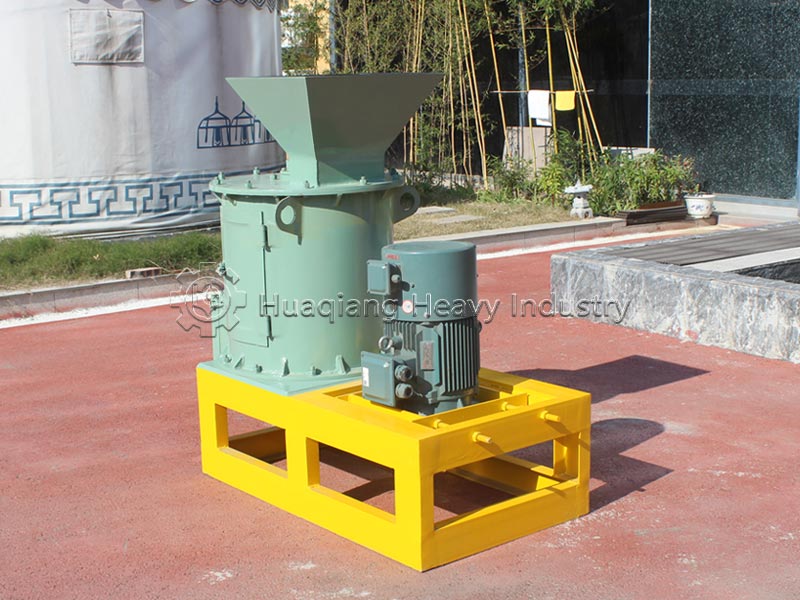
In the fields of organic fertilizer production and biomass resource utilization, the half-wet material crusher is becoming an indispensable core piece of equipment for an increasing number of manufacturers. Specifically designed for materials characterized by high moisture content, high fiber content, and high viscosity, it effectively resolves the industry-wide pain points associated with traditional crushers—namely, their susceptibility to moisture, stickiness, and clogging.
The half-wet material crusher primarily utilizes a design featuring two rotors operating in series. Its crushing process consists of two stages:
Stage 1——Coarse crushing by the upper rotor: After entering the crushing chamber through the inlet, the material first reaches the upper rotor's crushing zone. Impacted by high-speed rotating hammers, large chunks of material are initially broken down into smaller particles.
Stage 2——Fine crushing by the lower rotor: The initially crushed material is propelled into the lower rotor's crushing zone, where it undergoes further fine crushing by high-speed hammers. Simultaneously, the particles collide with one another and undergo grinding within the chamber——achieving a ”“hammer-on-material”and “material-on-material” crushing effect——ultimately producing fine powder that meets specifications and is discharged directly through the outlet.
Half-wet material crushers are widely used in the following fields:
This is the primary application for semi-wet material crushers. The equipment is specifically designed to crush livestock and poultry manure (such as chicken, cattle, and pig manure) as well as organic minerals like humic acid and lignite. In the organic fertilizer production process, crushing semi-wet materials serves as the crucial link between fermentation and granulation.
It grinds hard materials——such as glass, ceramics, bricks, and rubble——found in municipal solid waste compost.
It is suitable for crushing industrial organic waste, including pharmaceutical residues, spent mushroom substrate, waste from distilleries and sugar refineries, and raw materials from chemical plants.
It can be used to crush agricultural waste such as crop stalks and peat.
The equipment is also suitable for fine crushing operations in sectors such as mining, coal mining, and metallurgy.
Designed without a screen or bottom grate, this crusher handles over a hundred types of materials, discharging them directly from the outlet. It can process materials immediately after they are retrieved from water without clogging, thereby preventing motor burnout and production interruptions. By eliminating the traditional screen structure, the design fundamentally solves the issues of hole clogging and material buildup associated with wet materials.
The equipment accommodates moisture levels ranging from 25% to 55% for bio-fermented organic fertilizer materials, with some models handling ranges of 15% to 65%. This capability offers a distinct advantage when processing organic materials with high moisture content.
The core crushing components feature high-alloy, wear-resistant hammers. Manufactured using a forging process, these hammers are tougher and more durable than standard ones, significantly extending their service life.
Bidirectional gap adjustment technology for controllable particle size
The equipment utilizes bidirectional gap adjustment technology; as the hammers wear down, they do not require repair and can continue to be used by simply repositioning them. The output particle size is controlled by adjusting the gap between the hammers and the liner plate.
With over two decades of experience in the fertilizer equipment industry, Zhengzhou Huaqiang Heavy Industry holds numerous patents and operates its own R&D and manufacturing facilities. We offer equipment customized to specific production capacities, suitable for a wide range of organic fertilizer production lines. We handle the entire manufacturing process in-house with rigorous quality control at every stage, ensuring reliable equipment quality and a broad base of domestic and international clients. We also provide comprehensive one-stop services—including plant planning, installation and commissioning, on-site maintenance, and spare parts supply—ensuring a worry-free experience from pre-sales to after-sales support.
This half-wet material crusher is designed specifically for high-moisture materials; its screenless bottom structure prevents clogging, allowing for the continuous processing of high-moisture feedstocks such as chicken and cattle manure. It features a dual-stage rotor system equipped with wear-resistant alloy hammers, offering adjustable fineness and uniform particle size—ideal for subsequent granulation. The equipment is easy to operate and maintain, with simple parts replacement and low energy consumption; it delivers high output and cost-efficiency, making it suitable for fertilizer plants of all sizes.
| Model | BSFS-40 | BSFS-60 | BSFS-80 | BSFS-90 |
| Capacity (t/h) |
1~2 | 2~4 | 3~6 | 4~8 |
| Particle size (mm) | 0.5~5 | 0.5~5 | 0.5~5 | 0.5~5 |
| Power (kW) | 22 | 30 | 37 | 45 |
| Dimensions (mm) | 960×560×850 | 1632×1560×1180 | 2100×2060×1800 | 2500×2040×1800 |
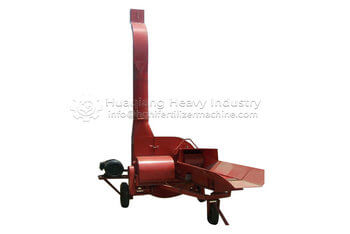
Crop straw crusher can crush corn straw, straw, peanut skin, beanstalk, flowers and other burning residues. It avoided the burning of crop straw, protected the environment, and effectively developed renewable energy. The machine is reliable in operation,
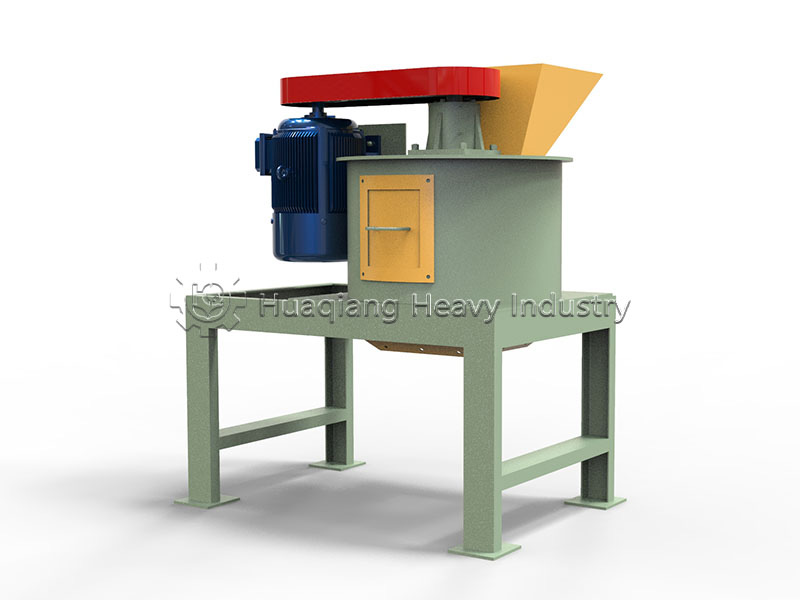
The chain crusher utilizes wear-resistant chains to pulverize material through high-speed impact; it is well-suited for handling caked fertilizer, resists sticking to walls or clogging, and ensures uniform discharge.
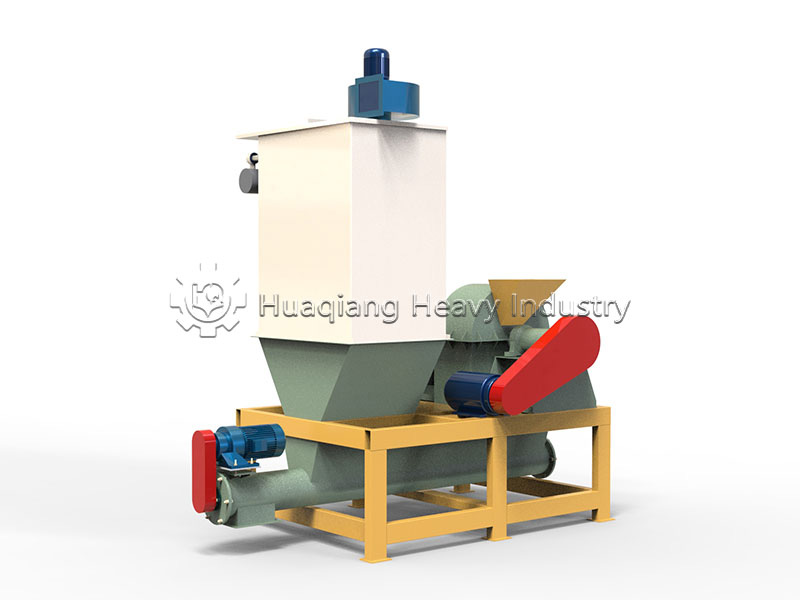
The cage crusher pulverizes materials through the impact of two cages rotating in opposite directions; it is capable of processing both dry and wet materials and is widely used in organic and compound fertilizer production lines.