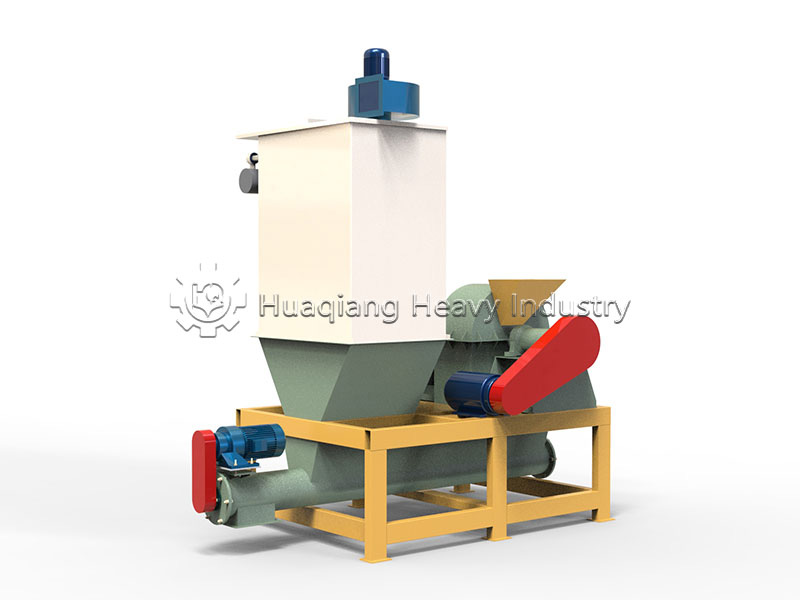


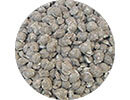
The cage crusher is a key piece of equipment in fertilizer production lines, designed for the fine crushing of brittle, agglomerated materials. Manufacturers of organic and compound fertilizers often struggle with machine clogging, material overheating and gelatinization, and inconsistent output particle sizes when processing materials such as caked urea, composted livestock manure, and humic acid raw materials; the cage crusher effectively resolves these industry pain points through its counter-rotating dual-cage structure. Many clients pair it with an organic fertilizer mixer to form a pre-processing stage, preparing suitable powdered material for the subsequent granulation process.
The machine consists of six main modules: a feed hopper, counter-rotating inner and outer cage assemblies, wear-resistant alloy cage bars, drive motors, a sealed housing, and a base discharge outlet. Unlike hammer mills, which rely on screens to control material output, the cage crusher utilizes an open crushing chamber without a bottom screen.
Material enters the central area of the inner cage from the top inlet, while two motors drive the inner and outer cage assemblies to rotate at high speeds in opposite directions. Driven by centrifugal force, the material is flung outward and subjected to repeated impact, shearing, and friction from the cage bars, gradually reducing in size. Material meeting the required particle size is discharged outward through the gaps between the cages due to centrifugal force, while larger particles continue to circulate and undergo further crushing within the chamber.
This crushing method results in a lower temperature rise due to friction; consequently, when processing heat-sensitive fertilizers like urea, issues such as melting and wall adhesion are less likely to occur. When integrated into a complete production line, the crushed material can be conveyed directly to a disc granulator for pellet formation, creating a seamless fertilizer processing workflow.
Straight fertilizers such as caked urea, monoammonium phosphate (MAP), diammonium phosphate (DAP), potassium chloride, and potassium sulfate; organic fertilizers made from composted cattle, chicken, and sheep manure; organic raw materials such as humic acid, distillers' grains, spent mushroom substrate, and rapeseed cake; and brittle non-metallic raw materials like gypsum and shale.
Organic fertilizer processing plants, compound fertilizer production bases, soil conditioner processing plants, and bio-fertilizer production lines.
Reference Layout for a Complete Production Line: Raw material fermentation ——Crushing——Mixing and granulation —— Drying, cooling, and screening. The crushing stage serves as the critical link between fermentation and granulation. To set up a complete production line, one can explore the full process configuration for organic fertilizer production.
Purchasing a Huaqiang Heavy Industry cage crusher entitles you to comprehensive one-stop service covering pre-sales, in-sales, and after-sales stages. Pre-sales engineers provide free model selection and support material testing via sample submission; we also offer production line layout planning. If you wish to compare equipment, we can also introduce our semi-wet material crushers and provide customized equipment solutions——factory visits are welcome.
During the production phase, equipment undergoes dual test runs before leaving the factory. We provide a full set of technical documentation, real-time production progress updates, and foundation construction drawings for guidance.
Upon delivery, our technicians provide on-site installation, commissioning, and operator training. The equipment comes with a one-year warranty and access to a 24/7 technical support hotline for rapid troubleshooting. We maintain a stock of wear parts—such as high-manganese steel cage bars——and offer long-term spare parts supply at reasonable prices.
For export orders, we provide English documentation and reinforced packaging suitable for ocean freight, as well as support for remote video commissioning. Lifetime free technical consultation is included.
If you are planning a fertilizer production line and wish to obtain detailed technical specifications, layout plans, and price quotes for a cage crusher, simply leave a message specifying the material type, target production capacity, and material moisture content; our technical engineers will then provide a tailored equipment selection plan.
| Model | Rotate speed | Power | Prod Capacity | Overall Dimensions L×W×H | Weight |
| mm | r/min | kw | t/h | mm | kg |
| WLF650 | 2000 | 26 | 4-6 | 1800×1300×1160 | 2300 |
| WLF800 | 2000 | 37 | 6-10 | 2200×1500×1360 | 2550 |
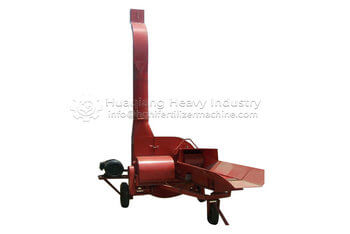
Crop straw crusher can crush corn straw, straw, peanut skin, beanstalk, flowers and other burning residues. It avoided the burning of crop straw, protected the environment, and effectively developed renewable energy. The machine is reliable in operation,
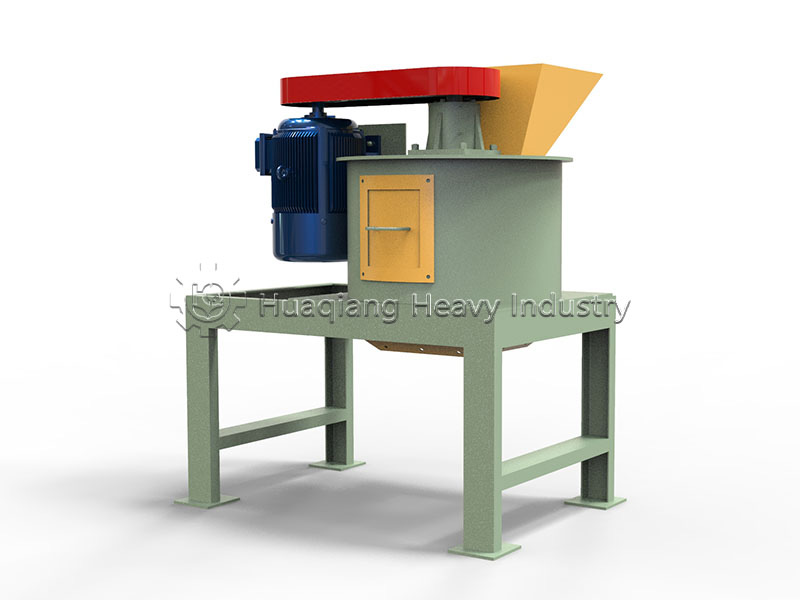
The chain crusher utilizes wear-resistant chains to pulverize material through high-speed impact; it is well-suited for handling caked fertilizer, resists sticking to walls or clogging, and ensures uniform discharge.

The half-wet material crusher is capable of crushing high-moisture, sticky materials; featuring a screenless, anti-clogging design, it serves as the core primary crushing equipment in organic fertilizer production lines.